
New energy calculator helps glasshouse growers cut fuel risk and future‑proof food production
As New Zealand grapples with rising energy costs and uncertain supply chains, questions about our fuel security and food security are becoming tightly knotted together.
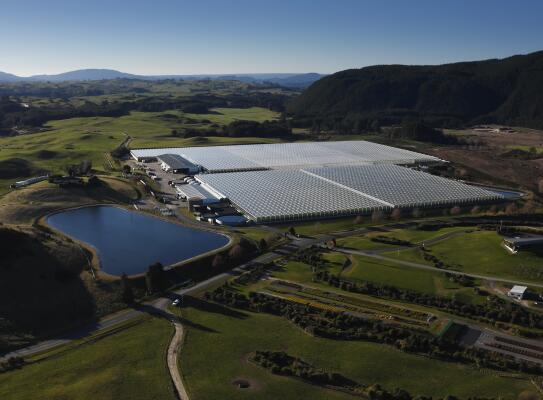
Our country relies year-round on our covered crop growers to produce affordable quality fresh produce, this includes 95% of our tomatoes, capsicums and cucumbers. Many of them operate glasshouses that sweep across from South Auckland to Bay of Plenty. Most of them rely on natural gas, waste oil or coal heating to maintain growing temperatures.
“Energy costs are currently about 40% of a grower’s overhead, heating is rapidly becoming one of the sector’s largest and most volatile operating costs. Keeping the heating on is seriously impacting our growers’ ability to keep operating. While many growers currently have their fuel supply locked in through contracts, the real risk is what happens when those contracts run out, and remaining on gas could become unaffordable,” says Dinah Cohen, General Manager of Covered Cropping NZ.
Dr Anya Seward from Earth Sciences New Zealand says the sector could turn to a more local solution, by rather ironically, looking underground.
“Simply, there is no more efficient way to produce heat than by starting with pre-existing heat. Using the geothermal heat directly in our earth’s crust offers a 24/7, low-emissions heating alternative that is more energy efficient than fossil-fuel burners and electric heating” says Seward.
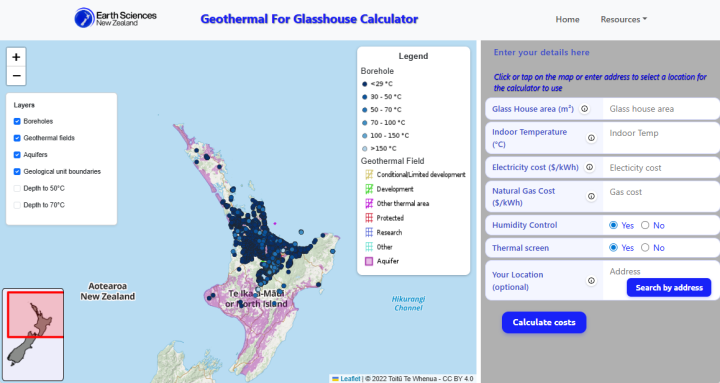
To help growers search for alternative solutions, Seward and her team from Earth Sciences New Zealand and GeoExchange NZ have launched a new “Geothermal for Glasshouses Calculator” (external link). This free online calculator is designed to help covered crop growers assess whether switching from fossil fuel heating to geothermal heating could be technically and economically viable. Growers have already been testing the tool to explore potential heating demand, fuel displacement, emissions reductions, and indicative cost considerations for their specific need.
Seward says the motivation in creating the tool was because geothermal heat presents a major opportunity for the glasshouse industry to reduce exposure to fuel shocks.
“This tool is about giving growers practical, science‑based insights so they can see what geothermal heating could mean for their business and for the resilience of the wider food system.”
Cohen says the calculator responds directly to questions growers are asking.
“Growers want reliable information about alternatives. Having a tool that’s specifically designed for glasshouse operations and grounded in New Zealand conditions is incredibly valuable. This helps turn geothermal heat from a concept into something growers can genuinely evaluate.”
“Speaking of the concept, it’s important for New Zealand to know that the use of geothermal heat in greenhouses is common overseas, even in places you don’t typically associate with the word ‘geothermal’, like the Netherlands” adds Cohen.
While geothermal energy is often associated with known hotspots like Taupō and Rotorua, the developers of the tool stress that its potential is far broader.
One of the key messages we want to get across is that geothermal isn’t just for a few regions or industries.
Across much of New Zealand, low‑temperature geothermal heat is readily available and suitable for many uses currently met by gas below 100°C, from space and water heating to food processing and concrete curing. Higher-temperature hotspots can also support more demanding industrial processes
“But to make realistic progress, New Zealand needs to invest in nationwide geothermal datasets and more tools, like this calculator, that are catered to other industries. Crucially, we also need ways to de‑risk development for potential end users, such as regionally distributed test bores and pilot projects that can confirm what’s in the ground and what it would take to use it. That kind of early investment is one reason greenhouse geoheat has scaled overseas, including in the Netherlands, where developers have drilled much deeper. We’re seeing encouraging signals in the Geothermal Strategy for New Zealand(external link) the government released last month. We have a long way to go, but the opportunity seems worth it.”
This initiative is supported by the Ministry for Primary Industries’ Sustainable Food and Fibre Futures fund and Vegetables NZ and Tomatoes NZ, and in collaboration with Earth Sciences New Zealand and GeoExchange NZ.
For all media enquiries, please call the Earth Sciences NZ media phone on: +64 21 574 541 or email us here(external link) .
Anya and Dinah are available for interviews.