
MBIE award a golden ending for Lakes380 research programme
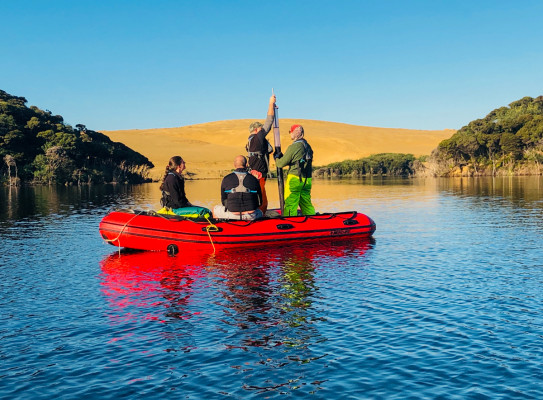
The Ministry for Business, Innovation and Employment (MBIE) has recently awarded the GNS Science Te Pū Ao and Cawthron Institute co-led Endeavour-funded Lakes380 research programme Gold Status, in recognition of 'excellence and impact'.
Wrapping up in June 2023, Lakes380 was the largest study of lakes in Aotearoa’s history, sampling around 10% of naturally occurring lakes to understand their health now and in the past. The team travelled across Aotearoa collecting and analysing water samples, lake bottom sediment samples and lake sediment cores, as part of the five-year research programme.
Prior to this research environmental data was available for fewer than 5% of our lakes, with most monitoring records only covering the past 20-30 years, presenting challenges for the design of successful restoration programmes. By analysing the sediment records dating back 1,000 years, the team were able to develop important baseline information about the history of the lakes and how they’ve responded to past environmental pressures pre and post human settlement.
"This historical context can help guide future management, including setting informed restoration targets and deciding which values inform those efforts – whether cultural, economic or other community values," said Dr Marcus Vandergoes, GNS Science paleoecologist and Lakes380 programme co-leader.
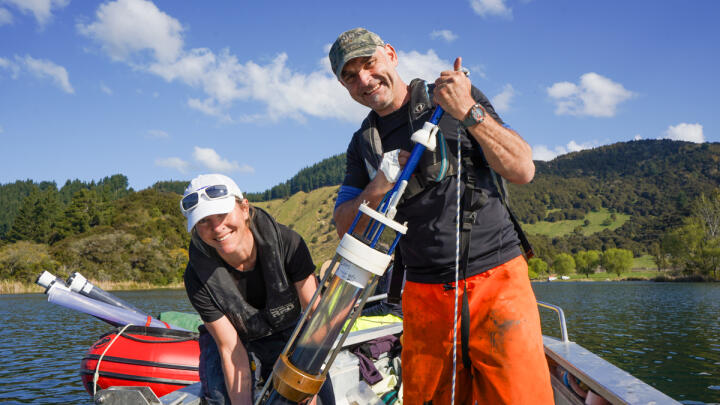
Lakes380 had a strong mātauranga Māori (Māori knowledge) focus, with four rohe (tribal territory) studies working in partnership with iwi. Programme co-leader Dr Susie Wood, Cawthron Institute freshwater scientist, said that being able to contribute to the aspirations of these iwi-led restorations projects was a rewarding outcome, and the knowledge shared enriched the project.
"Our scientific research only provides one layer of knowledge and information; by interweaving the biophysical data with mātauranga Māori were able to develop a richer understanding of the value and health of our lakes."
Dr Vandergoes said that receiving Gold Status from MBIE was a privilege, and a fantastic acknowledgement to the effort of the whole team and the supporting institutes.

This recognition is hard to achieve, and everyone in the team should be incredibly proud of this award.
Lakes380 leaves a big legacy, with the data generated assisting with the implementation of the National Policy Statement for Freshwater Management, the development of innovative techniques and tools, a phenomenal archive of core material and samples and many smaller projects already springboarding off the data and working relationships.
A new Endeavour programme Our Lakes, Our Future co-led by Cawthron Institute and GNS will build upon the knowledge gained and techniques innovated, to develop holistic approaches to characterise, diagnose, and improve lake health. The programme aims to dramatically improve lake management and restoration in Aotearoa New Zealand through the implementation of these new approaches.
Our Lakes, Our Future is highly collaborative programme involving four iwi partners – Manawhenua Ki Mohua, Rangītikei iwi, Te Arawa Lakes Trust and Ngāti Pāhauwera – 13 national and international research institutes including University of Waikato, Victoria University of Wellington and University of Otago, and 15 stakeholders including regional councils and central government.
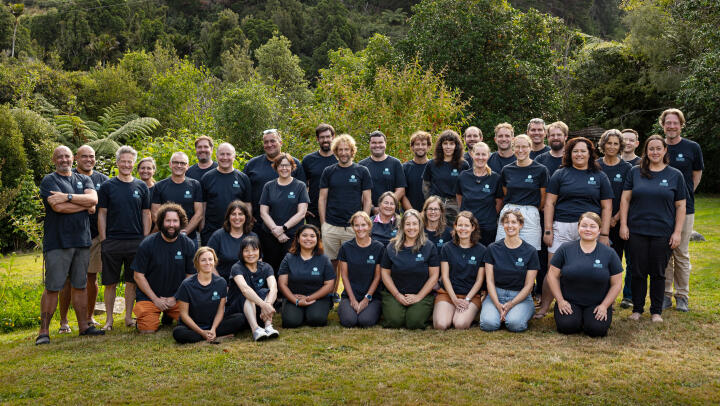
The programme was recently launched with a hui to connect and reconnect team members, and lay the foundation for a successful and productive five years of research.
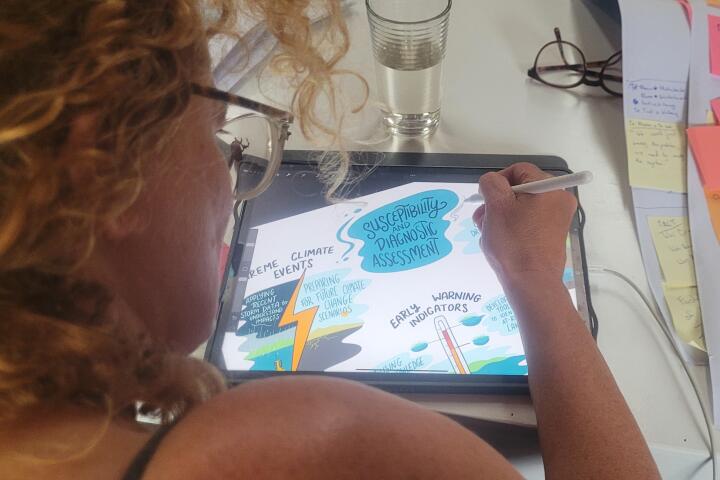
The hui gave the team and stakeholders an overview of the programme, and how each part contributes to the overall vision for lakes in Aotearoa New Zealand to be treasured and flourishing. Work got underway to map out the critical steps of the programme under the three main research aims: holistic lake health, susceptibility and diagnostic assessment, and lake restoration framework.
Science communication was a strength of the Lakes380 project – the team won the Science Communicators Association of New Zealand (SCANZ) Excellence in Science Communication Award for their efforts – and is also embedded in Our Lakes, Our Future. As part of this innovative approach, illustrator Yasmine El Orfi attended the hui, capturing the discussions and creating a series of illustrations that will be used to communicate project objectives to audiences beyond the project team.
"The hui was an important launching event to welcome new and old team members, and successfully recharged the enthusiasm for the mahi to come over the next five years," said Marcus.
The team is looking forward to getting research underway. One of the first pieces of work will explore the impact of extreme weather events on lake ecosystems, using lake monitoring data gathered pre and post Cyclone Gabrielle.