

Investigating what lies beneath Antarctic ice
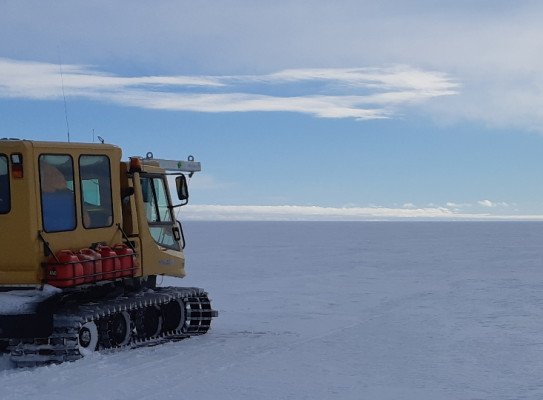
Sometimes to look forward, you need to look back.
Our expertise in measuring gravity and collecting seismic data is helping to pave the way for a major international study of how the Ross Ice Shelf and the West Antarctic Ice Sheet will respond in a warming world. This in turn will lead to better estimates of sea level rise and its likely impact on our coastal communities.
Researcher Dr Jenny Black of GNS Science, who participated in the Antarctic fieldwork, says the aim of the work was to improve the understanding of how the Continent’s ice behaved during past warm periods in Earth’s history.

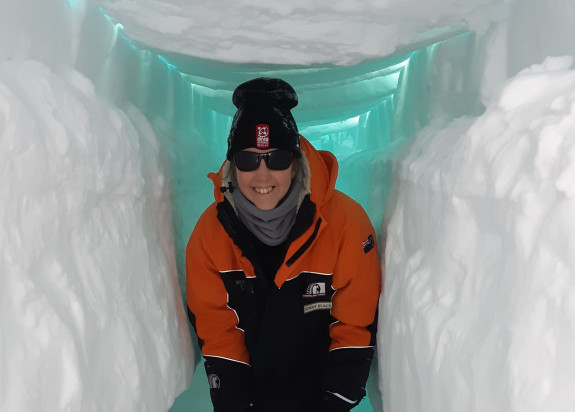
Our scientists led an Aotearoa New Zealand team that collected gravity and seismic measurements at an area known as the Siple Coast, on the eastern side of the Ross Ice Shelf. This will help lay the groundwork for several research seasons ahead.
The area is the ‘grounding line’ of the West Antarctic Ice Sheet, where the ice meets the ocean and starts to float, becoming the Ross Ice Shelf. Scientists see the ‘grounding line’ as an area of great importance for understanding how ice flows into the ocean and what happens to it once it does.
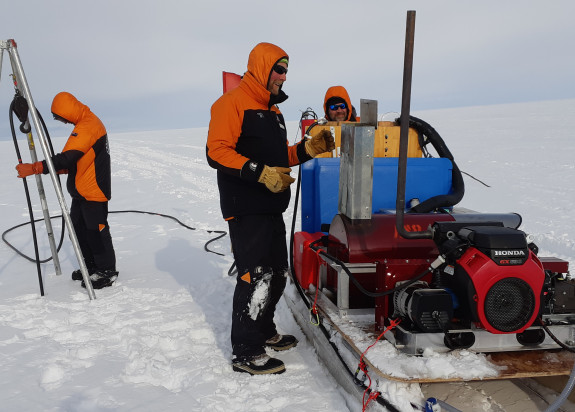
“We took 150 gravity measurements on a 20km x 20km rectangular grid using a portable gravity meter. This helps us understand the nature and thickness of the rocks and sediment beneath the ice.”
The measurements will indicate the optimum location for future ice and sediment studies. Modelling seismic and gravity data will help identify the best site to drill for geological records of past environmental change ice sheet variability.
In coming seasons, a drilling system developed in Aotearoa New Zealand will collect sediment cores from beneath the ice shelf that will enable scientists to test the climate and ice sheet models that are used to forecast future changes.
Modelling has shown that if the West Antarctic Ice Sheet melts, global sea level will rise 4 metres. Levels will rise even more if the larger East Antarctic Ice Sheet melts.
“The aim of this research programme is to find out when and how fast this will happen. Findings will contribute to global climate models and help New Zealanders to mitigate and adapt to future environmental and climate change,” says Dr Black.
This research is funded by the New Zealand Antarctic Research Institute and the MBIE-funded New Zealand Antarctic Science Platform, and is a collaboration involving Victoria University of Wellington, GNS Science, NIWA, the University of Otago, and the University of Canterbury.