Home / About Us / Structure & People / Principal Scientists

Principal Scientists

GNS Science has a proud tradition of scientific excellence and internationally recognised research. Leading the way are our principal scientists who have substantial and enduring reputations in their fields. They demonstrate high productivity and outstanding achievement in science innovation and original thinking. They are recognised by their peers and by non-research entities as pre-eminent. Our principal scientists attract valuable collaborations and business opportunities and represent New Zealand with distinction on the international stage.
Stephen Bannister

Stephen Bannister
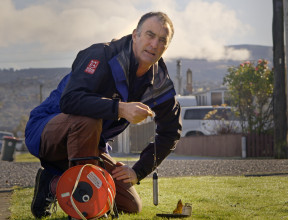
Stephen is a seismologist who specialises in imaging Earth’s structure using seismic waves from earthquakes. In the past he has imaged the crust and mantle beneath the Taupo Volcanic Zone, Fennoscandia, the Transantarctic Mountains and the Terror rift in Antarctica. Currently his research is focused on investigating seismicity associated with the Alpine Fault, on imaging the heat sources beneath New Zealand’s geothermal fields, and on detecting and characterising the seismic signature of dynamic processes associated with plate subduction. He currently leads the seismology project under the New Zealand Natural Hazards platform.

beavan

John Beavan
John is a geophysicist who explores the deformation of the Earth’s surface. As well as being the primary cause of earthquakes, this deformation is the underlying reason for the present appearance of the New Zealand landscape. John uses geodetic techniques, such as GPS, to precisely measure the deformation associated with plate tectonics, earthquakes and volcanoes. He uses these measurements to investigate the underlying mechanisms behind the deformation, and applies the results to enhancements in the New Zealand survey system and improved estimation of earthquake and volcano hazard. He has been heavily involved in the development of GeoNet, and is an advisor to a similar project in the United States.

benites

Rafael Benites
Rafael is a geophysicist who specialises in numerical modelling of seismic wave propagation and earthquake fault ruptures. One of his main projects is to combine numerical techniques and observed earthquake data to predict strong ground motion in the Wellington metropolitan region in the event of a large earthquake on the Wellington Fault. Rafael's work on different subjects of wave propagation has led to numerous collaborations with international colleagues. In 1998 he won a Japanese Fellowship for the Promotion of Science, and in 2003 he worked as a consultant in the Bullard Laboratory, University of Cambridge, England. In 2005 he was an invited speaker at the Department of Geophysics of Beijing University, China, and in 2008 at the Earthquake Research Institute, Tokyo University, Japan.

beu

Alan Beu
Alan is a paleontologist who studies fossil shells, or molluscs, of New Zealand’s Cenozoic marine rocks (deposited during the last 65 million years), to provide information on climate change, on depositional environments of rocks, on the history of the present fauna, on the record of organic evolution, and on the contribution of New Zealand fossils to evolutionary theory. His particular focus is on young fossils (last 5 million years), on fossil scallops, and on a worldwide group of gastropods. His international recognition has led to five visiting professorships at the French National Museum of Natural History in Paris. Alan is also a Fellow of the Royal Society of New Zealand.

crampton

James Crampton
James is a paleontologist with expertise in the quantitative analysis of paleontological data for both applied and blue skies research. Recent paleobiological research has focussed on New Zealand's wonderful fossil record of Cenozoic shellfish, the factors that control real and apparent biodiversity through time, and the attributes that enable species to persist for millions of years. James has also worked extensively in the areas of high resolution quantitative biostratigraphic correlation, geological time scale development, the numerical description of biological form, and the Cretaceous stratigraphy and biostratigraphy of New Zealand. He is currently collaborating with several overseas scientists on a range of projects, is a member of several international advisory and editorial boards, and is a recipient of the McKay Hammer Award from the Geological Society of New Zealand.

deronde

Cornel de Ronde
Since 1997 Cornel, a geologist, has led a sustained GNS Science programme to discover and understand submarine volcanism and hydrothermal venting along the Kermadec section of the Pacific Ring of Fire northeast of New Zealand. This frontier research includes exploring active submarine volcanoes and their seafloor hot springs using surface ships, remotely operated vehicles, autonomous underwater vehicles, and manned submersibles. Cornel has successfully brought together diverse groups of highly skilled specialists from many organisations and numerous countries to study the 2500km stretch of volcanic arc between New Zealand and Samoa. He is internationally recognised for this work and is in high demand as a speaker at a wide variety of forums from scientific conferences to special interest groups and schools. He is President-elect of the International Marine Minerals Society.

Stuart Henrys

Stuart Henrys
Stuart studies how tectonic plates collide deforming the North Island of New Zealand and break apart to create the rifted Victoria Land Basin in Antarctic. His work requires the integration of a wide range of geophysical and geological observations. The results underpin geological hazard analysis, exploration of natural resources, and aid in reconstructing paleo climate records. Stuart leads an international research programme studying the plate boundary beneath Wellington. He has been a member of an IODP Site Characterisation Panel and recently rotated off the Australian-NZ IODP Science Committee. Stuart is an Adjunct Professor at Victoria University of Wellington and a member of the Royal Society Committee on Antarctic Sciences.

Chris Hollis

Chris Hollis

Chris Hollis is a micropaleontologist and paleoclimatologist with a particular focus on southern Pacific climate variation during the greenhouse world of the Paleogene. He has been the principal investigator on two Marsden Fund projects and was awarded the McKay Hammer by the Geological Society of New Zealand in 2005 for his Marsden team's research on the mass extinction that wiped out the dinosaurs at the Cretaceous-Paleogene boundary. Chris recently stepped down as Head of the Paleontology Department but remains the New Zealand coordinator for the Integrated Ocean Drilling Program.

isaac

Mike Isaac
Mike is a stratigrapher - a geologist who specialises in the study of rock strata, especially the distribution, deposition, and age of sedimentary rocks. He planned, led, and still plays a part in the QMAP national geological map and digital database programme. Mike now leads the Offshore Prospectivity Atlas, a project designed to assess the sedimentary basins of New Zealand's vast offshore territory.

John Vedamuthu Kennedy

John Kennedy
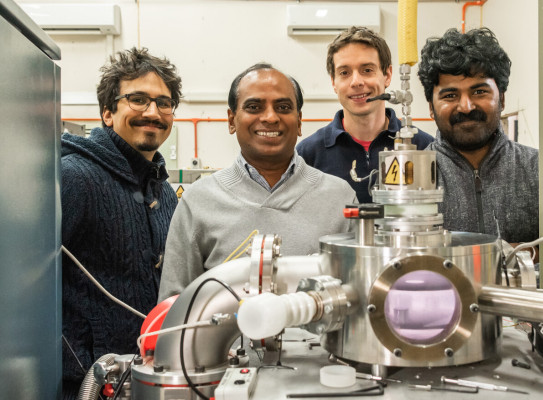
John is an ion beam physicist who works on new materials development and ion beam analysis for advanced materials, biology, geology and environmental applications. He is currently investigating metal and metal oxide nanoparticle growth and their structural, electrical, optical and magnetic properties. His team is working on developing a proof-of-concept sensor devices. John leads the GNS Science core science programme of ion beam applications which focuses on research and development of ion beam technology for industry and environment sectors. He is a Principal Investigator in the high technology industry focused Materials Accelerator at University of Auckland. He is also an Associate Investigator in the MacDiarmid Institute and Research Associate at Victoria University of Wellington and The University of Auckland. John is a New Zealand representative in the international Marine pollution projects in Asia coordinated by the International Atomic Energy Agency

king

Peter King
Peter is a sedimentologist, who studies the 80 million-year history of New Zealand’s sedimentary basins. He reconstructs the paleo-geography of ancient fluvial and marine depositional systems from the type and distribution of sedimentary rock layers, to provide a geological framework for predicting present-day subsurface occurrences of petroleum. His particular interest is reservoir sandstone sequences deposited in deep marine environments. Peter is leader of the GNS Science petroleum research programme. He has received a DSc degree and a NZ Science and Technology Bronze Medal for his reference works on the petroleum-producing Taranaki Basin, and has won awards for best paper and best poster at international oil industry conferences.

markwitz

Andreas Markwitz
A nuclear physicist by training, Andreas leads GNS Science's ion beam analysis, nanotechnology and advanced surface materials programmes. His nanotechnology team has won worldwide recognition for developing silicon nanostructures and zinc oxide materials with potential uses in next generation electronic and sensor devices. He also has interests in understanding the nature and sources of particulates in air pollution and in analysing otoliths to find out more about more about the life cycles of commercial fish species and shellfish. Andreas is a principal investigator and science executive with the MacDiarmid Institute of Advanced Materials and Nanotechnology. He is also a principal investigator in the industry-focussed Materials Accelerator at Auckland University, and the New Zealand representative and international programme leader for air pollution projects in Asia, coordinated by the International Atomic Energy Agency.

mcverry

Graeme McVerry
Graeme is an engineering seismologist who researches and develops seismic hazard models for New Zealand. This includes developing models for the attenuation of strong ground motion from earthquakes in New Zealand. Graeme has provided seismic hazard consultancy services for major developments in New Zealand and Australia, including work on bridges, dams, electricity distribution facilities, and port facilities.

mildenhall

Dallas Mildenhall
Dallas is a palynologist with over 40 years experience specialising in forensic palynology, and with additional expertise in Southern Hemipshere Cretaceous-Cenozoic palynology, biostratigraphy and paleoenvironmental analysis. His current research focus is on palynology and paleobotany of Oligocene-Miocene time in relation to New Zealand's then geographic position. His forensic international reputation has resulted in twice being guest Professor at the Institute of Botany, University of Vienna and he has presented invited and keynote addresses, workshops and courses in forensic palynology in Australia, Austria, Italy, New Zealand, Portugal, Spain, Switzerland, Thailand and the USA. Dallas has published over 400 scientific articles on all aspects of palynology and paleobotany, including four monographs and a number of book chapters.

Nick Mortimer

Nick Mortimer
Nick Mortimer is a petrologist in the Department of Regional Geology and uses the composition and textures of rocks to help solve a variety of geological and tectonic problems. He has worked in the U.S., Canada, Australia, Antarctica, the offshore SW Pacific and all over New Zealand. Nick is best known for his work in Zealandia’s greywacke and schist basement, but has shown that team investigations of any part of the geological column can benefit from a little petrology and some big-picture thinking. Nick is the present Curator of GNS Science’s National Petrology Rock Collection and the PETLAB database. He is an Associate Editor for the New Zealand Journal of Geology and Geophysics and a past-President of the Geoscience Society of New Zealand.

Tim Naish
Tim Naish is a sedimentary geologist and paleoclimatologist with a particular research focus on reconstructing Earth’s past climate, ice volume and sea-level from continental margin stratigraphic records. He was co-chief scientist of the international ANDRILL McMurdo Ice Shelf Project and led GNS Science’s Antarctic research programme up until 2009, when he became Director of the Antarctic Research Centre at VUW. He retains a 0.2FTE position at GNS Science. Tim is Director of the Joint Antarctic Research Institute, which is a collaborative initiative between NIWA, GNS Science and VUW. He is a lead author on IPCC 5th Assessment Report, and he was awarded the New Zealand Antarctic Medal in the 2010 New Years Honours for contributions to Antarctic climate science.

nicol

Andy Nicol
Andy is a structural geologist who studies the deformation of the Earth and its surface. He focuses on deformation processes that result in the development of faults and folds on timescales of thousands to millions of years. This has lead to research interests in prehistoric earthquakes, plate tectonics, fault-zone architecture and landscape evolution. The resulting information provides improved estimates of earthquake hazards and assists in hydrocarbon exploration. Andy's work on faults and prehistoric earthquakes has led to numerous collaborations with international colleagues, including the world leading Fault Analysis Group in Ireland.

reyners

Martin Reyners
Martin is a seismologist who focuses on the seismicity, structure and tectonics of the plate boundary through New Zealand. His particular interest is the country’s two subduction zones, which he has studied in detail with dense deployments of portable seismographs. A major motivation for this work has been to determine the seismic hazard posed by the shallow part of the plate interface. He has also increased understanding of recent large earthquakes through detailed aftershock studies. Martin’s work has led to substantial international collaboration, and has been recognised with a New Zealand Science and Technology Medal, the New Zealand Geophysics Prize (twice), and Fellowship of the Royal Society of New Zealand.

rhoades

David Rhoades
David is a geophysical statistician who works on improving models for earthquake hazard and risk, to provide better information on the likelihood of future large earthquakes and their damaging effects, and to increase our understanding of how earthquakes are generated and what make us vulnerable to them. His pioneering collaborative studies on patterns in the occurrence of small earthquakes before big ones, are leading the way internationally in developing testable methods for long-range earthquake forecasting. He is an Associate Editor of the Journal of Geophysical Research, and co-chair of the Working Group on Earthquake Predictability of the International Association for Seismology and Physics of the Earth's Interior.

sutherland

Rupert Sutherland
Rupert studies the large-scale processes of plate tectonics and how these have led to the formation of New Zealand and the South Pacific, and continue to modify the region. His work requires the integration and analysis of geophysical and geological observations. The results provide a framework for applied analysis of petroleum basins and other resources, has implications for geological hazard analysis, and for understanding and adapting to a range of natural environmental issues. Rupert leads a GNS Science research programme that investigates the impacts of plate tectonics in and around New Zealand.

Richard Sykes

Richard_Sykes
Richard is a petroleum geochemist who studies organic-rich rocks and petroleum fluids to help exploration companies find more oil and gas resources for New Zealand. In 2004, he discovered that New Zealand crude oils are derived mostly from fossil leaf cuticle in coal seams, helping to dispel the widely held theory that coals expel only gas. His current research interests involve using the geochemical fingerprints of oils to identify genetic oil families and determine oil maturity, information which helps to reveal the petroleum “plumbing systems” in the subsurface. Richard is currently leader of the Petroleum Source Rocks & Fluids research programme and a visiting lecturer at Victoria University of Wellington. He has been a visiting scientist at the Geological Survey of Canada and the GeoForschungsZentrum (Germany) and regularly presents seminars and short-courses at international conferences and directly to exploration companies.

wood

Ray Wood
Ray is interested in the integration of geological and geophysical data to understand the geology, tectonic history and resource potential of New Zealand. He is a Principal Scientist in the Marine Geoscience Department. Ray helped lead the technical team that defined New Zealand’s continental shelf and he is currently helping several other countries write their UNCLOS submissions. He has actively contributed to the development of government marine policy and was the Technical Director of an IT startup. The continental shelf team won Wellington's Discovering Gold award in 2009 and Ray was a finalist in the science category for Wellingtonian of the Year in 2009.